
Building Access Routes That Handle Daily Use
Driveways and Roads in Gainesville for properties needing gravel access routes that manage vehicle traffic, drainage, and long-term surface stability
NGT Grading and Utilities LLC installs gravel driveways and access roads in Gainesville, Jefferson, Winder, and surrounding areas, creating durable routes for residential homes, rural properties, and job site access. You need a driveway or road when your property lacks a defined access route, when mud and ruts prevent reliable vehicle passage, or when new construction requires equipment and delivery trucks to reach the site without damaging surrounding land. When your property has uneven terrain, poor drainage, or soft soil, the installation process must include grading, compaction, and base preparation to prevent the gravel from sinking or washing out. NGT Grading and Utilities LLC builds access routes that distribute weight, shed water, and remain stable through seasons of use.
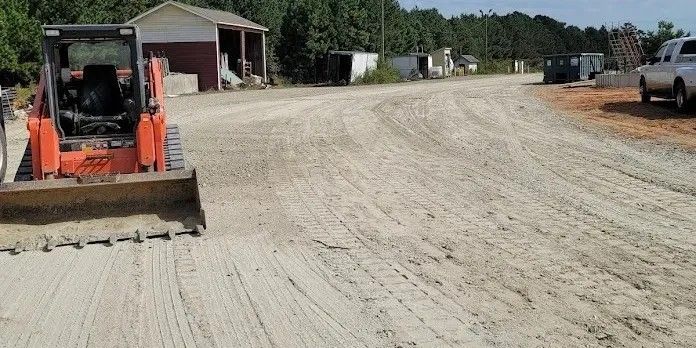
Driveway and road installation begins with clearing vegetation, removing topsoil, and grading the route to establish a slight crown or slope for water runoff. A compacted base layer of crushed stone or gravel is spread and rolled to create a stable foundation, followed by a top layer of finer gravel that locks together under traffic. In Gainesville, and throughout North Georgia, where rainfall is frequent and clay soils can hold water, proper grading and drainage design are critical to preventing washouts and surface erosion. The finished route provides a firm, well-drained surface capable of supporting daily vehicle use, deliveries, and seasonal weather conditions.
If your property in Gainesville or a neighboring community needs a gravel driveway or access road that handles vehicle traffic and drains properly, contact NGT Grading and Utilities LLC to review the site and plan the installation.
How Gravel Driveways and Roads Are Built to Last
You receive a gravel surface that is graded for drainage, built on a compacted base, and shaped to prevent erosion. Heavy equipment clears the route, excavates soft spots, and compacts each layer to create a stable foundation. The gravel is spread evenly and crowned or sloped to direct water off the surface and into surrounding soil or drainage features.
After installation, you see a smooth, firm driveway or road that sheds water without pooling, resists rutting under vehicle weight, and remains passable in wet conditions. The surface feels solid underfoot and under tire, and the edges are defined to prevent gravel migration into adjacent grass or landscaping. NGT Grading and Utilities LLC ensures the route aligns with property contours, connects to existing roads or driveways, and meets your access needs without creating drainage problems for neighboring areas.
The service includes site clearing, grading, base preparation, and gravel installation, but does not include paving, concrete edging, or culvert installation unless arranged separately. If your property requires extensive drainage work such as ditch grading or pipe installation, those additions are discussed during planning. NGT Grading and Utilities LLC works on residential driveways, rural access roads, and temporary job site routes, tailoring the design to match traffic volume and site conditions.
Answers About Gravel Driveway and Road Installation
Gravel driveways and roads require proper design and material selection to perform well over time. These answers address common questions about the installation process.
What types of gravel are used for driveways and roads?
A compacted base layer typically uses larger crushed stone such as number four stone, topped with smaller gravel like crusher run or pea gravel that compacts tightly and resists washout.
How does grading affect driveway performance?
Proper grading creates a crowned or sloped surface that sheds water to the sides, preventing pooling, erosion, and soft spots that lead to ruts and sinkholes.
When should a driveway be installed during site development?
Driveway installation occurs after clearing and rough grading are complete but before final landscaping, allowing equipment access without damaging finished areas.
Why does base preparation matter for long-term stability?
Compacting the subgrade and installing a crushed stone base layer distributes vehicle weight and prevents the top gravel layer from sinking into soft soil, especially in Gainesville where clay soils can soften after heavy rain.
How wide should a driveway or access road be?
Residential driveways are typically ten to twelve feet wide, while access roads for construction or farm equipment may need fourteen to sixteen feet to allow safe passage and maneuvering.
If your Gainesville property requires a gravel driveway or access road built to handle regular use and local weather conditions, NGT Grading and Utilities LLC is available to evaluate the site and schedule the work. Call (770) 539-4042 to discuss your access needs and installation options.