Installing Infrastructure Below the Surface
Trenching and Utilities in Gainesville for new construction and property upgrades that require water, sewer, electrical, and drainage lines placed underground
NGT Grading and Utilities LLC provides trenching and utility preparation services in Gainesville, Braselton, Commerce, and surrounding areas for property owners and builders who need underground lines installed to support new construction, additions, or infrastructure upgrades. You need this work when water and sewer connections must be run from the main lines to a building, when electrical conduit or drainage pipes require burial, or when existing systems need replacement or expansion. Trenching creates the pathways necessary to install these lines at the correct depth and grade, and proper backfilling ensures the ground remains stable after installation is complete.
The work involves excavating narrow trenches to precise depths based on utility type and local code requirements, coordinating placement with utility providers and contractors, and backfilling trenches with compacted material once lines are set. Trenches for water and sewer must follow specific grades to ensure flow, while electrical and data conduits require adequate depth to meet safety and burial standards. In Gainesville and throughout North Georgia, where clay soils and existing infrastructure create obstacles, trenching often requires careful routing to avoid conflicts with septic systems, rock layers, or tree roots that block direct paths.
Reach out to discuss trenching requirements for your project and receive a plan that coordinates with your builder and utility providers.
What Trenching Delivers for Site Infrastructure
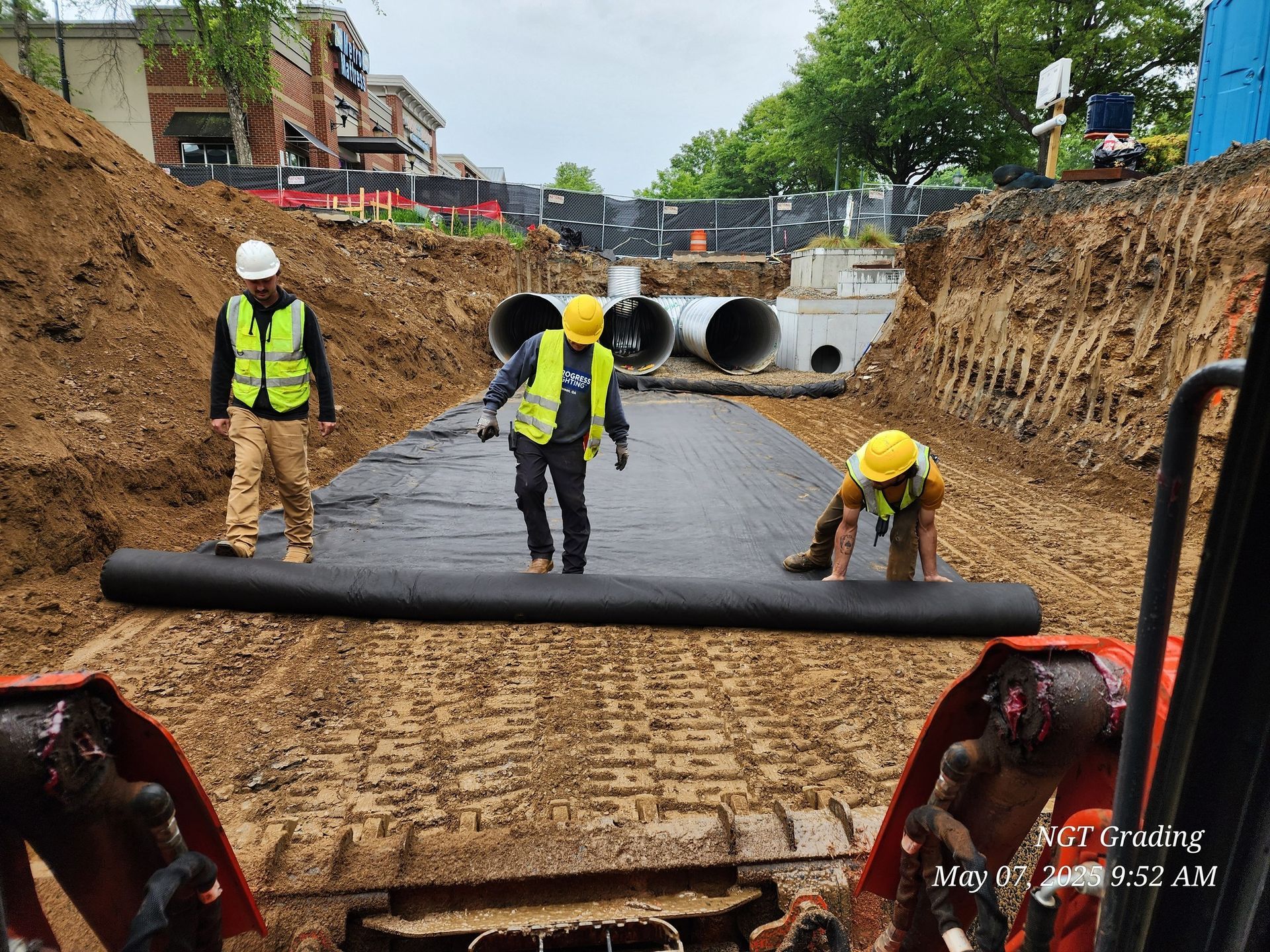
You receive trenches excavated to the depths and slopes required for each utility type, with clean walls and stable bottoms that support pipe installation. Excavators or trenchers cut through soil and compacted layers, removing material and creating space for conduit, pipe, or drainage lines to be placed according to plan. The equipment adjusts trench width based on line size and bedding requirements, and operators verify depth and grade as the trench progresses to prevent costly rework.
After trenching and backfilling are finished, you see underground lines installed and protected, with the ground surface restored and compacted to prevent settling. Water flows to fixtures, sewer lines drain properly, and electrical conduits protect wiring from moisture and damage. NGT Grading and Utilities LLC completes trenching with attention to depth accuracy, compaction standards, and coordination with inspectors and contractors so utility installations pass inspection and function reliably over the life of the project.
Trenching does not include installing the utilities themselves, such as plumbing fixtures, electrical panels, or drainage structures. It prepares the ground and creates the pathways necessary for licensed trades to complete their installations. Timing is critical, as trenching must happen after rough grading but before final grading and landscaping to avoid damaging finished surfaces.
Key Information About Trenching for Utility Installation
Trenching requires coordination with multiple parties and adherence to depth and placement standards, so understanding the process helps you avoid delays and ensure proper installation.
What determines how deep trenches must be for different utilities?
Water lines typically require burial below the frost line, sewer lines need consistent downward slope, and electrical conduit must meet National Electrical Code depth requirements to prevent accidental damage.
How does trenching coordinate with other site work?
Trenching usually follows rough grading and precedes final grading, allowing utilities to be installed without disturbing finished surfaces or landscaping.
When should utility locates be completed before trenching begins?
All existing underground utilities must be marked by the appropriate locate service at least two business days before excavation to prevent damage to water, gas, electrical, or communication lines.
Why does soil type in Gainesville affect trenching difficulty?
Clay soils become sticky and difficult to excavate when wet, and rocky subsoil may require different equipment or additional time to reach required depths.
What happens if trenches encounter unexpected obstacles?
Rock, buried debris, or unmarked utilities may require rerouting, additional excavation, or coordination with utility owners to safely proceed without damage or delay.
NGT Grading and Utilities LLC works with builders and property owners across Gainesville and neighboring communities to install trenches that support reliable utility connections and complete site infrastructure. Call to schedule a trenching consultation and coordinate utility preparation with your construction timeline and inspection requirements.