Excavating for Reliable Wastewater Management
Septic System Installation in Gainesville for residential properties requiring excavation, grading, and placement support to meet system requirements and site drainage conditions
NGT Grading and Utilities LLC provides septic system installation excavation in Gainesville, Commerce, Winder, and surrounding areas, preparing residential properties for the placement of septic tanks, drain fields, and associated components. You need septic excavation when your property lacks access to municipal sewer, when building a new home in a rural area, or when replacing a failing system that no longer meets code or performance standards. When your site includes sloped terrain, high water tables, or restrictive soil types, the excavation and grading work must account for those factors to ensure the system drains properly and functions reliably over decades of use. NGT Grading and Utilities LLC works within system design specifications, site conditions, and local regulations to deliver excavation that supports long-term septic performance.
Septic installation excavation involves digging trenches for the tank and drain field, grading the area to maintain proper slope, and preparing the soil to accept wastewater without pooling or runoff. The tank is set at the correct depth and elevation relative to the house plumbing and drain field, and the trenches are shaped to distribute effluent evenly across the absorption area. In Gainesville, and throughout North Georgia, where soil percolation rates and seasonal groundwater levels vary, the excavation must align with soil test results and health department requirements to ensure the system meets approval standards. The work prepares your property for a functional septic system that treats wastewater safely and complies with local codes.
If your property in Gainesville or a neighboring community requires septic system excavation and grading to support new installation or system replacement, contact NGT Grading and Utilities LLC to review site conditions and plan the work.
How Excavation Supports Septic System Function
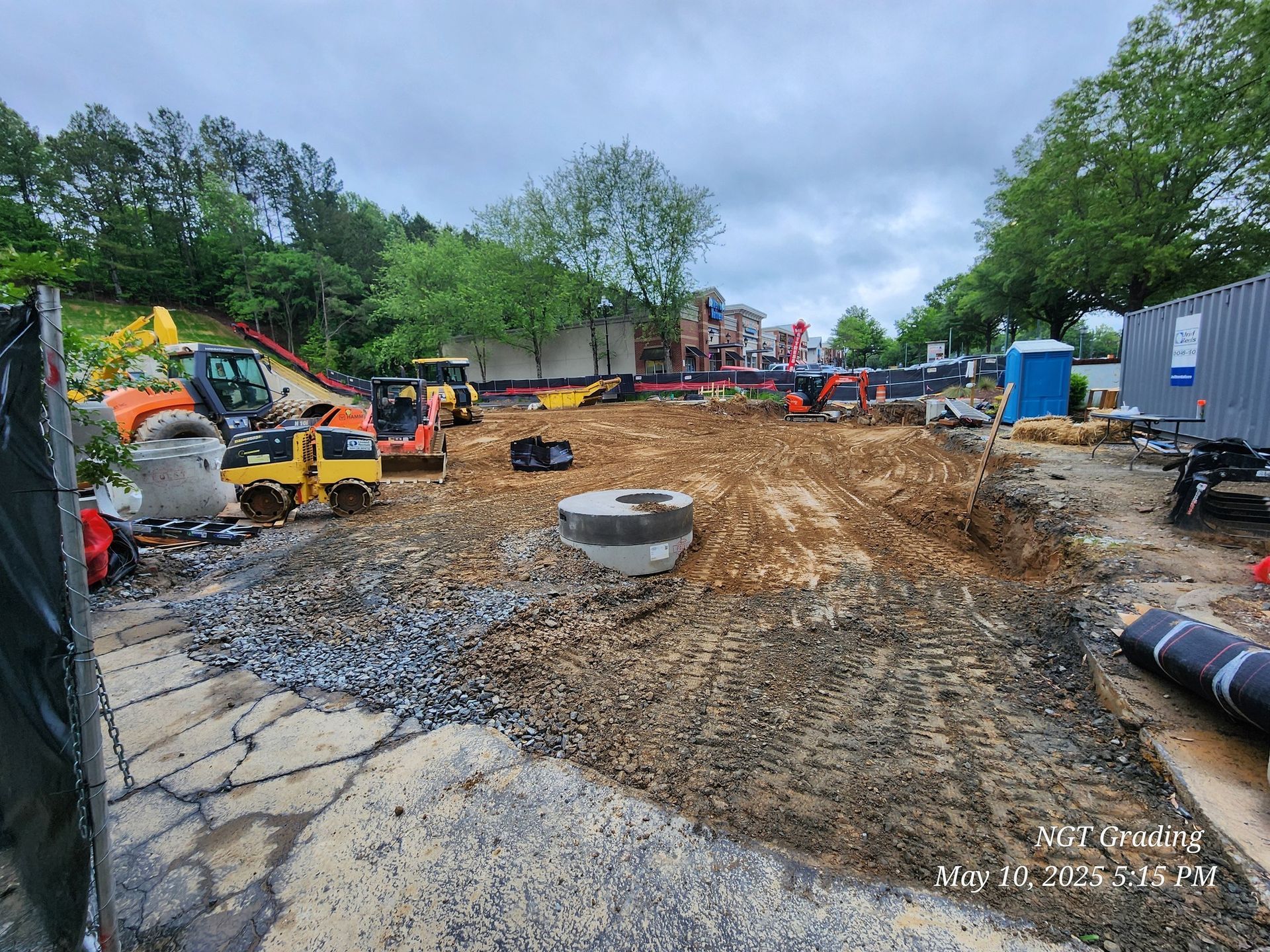
You receive excavation service that digs trenches to the specified depth, grades the site to maintain proper drainage slope, and compacts backfill around the tank and piping to prevent settling. Heavy equipment removes soil in controlled passes, checking depth and alignment to match the system design provided by your installer or engineer. The tank sits level and stable, and the drain field trenches are uniform in depth and spacing.
After excavation is finished, you see a septic tank positioned at the correct elevation with inlet and outlet pipes aligned, drain field trenches prepared for gravel and perforated piping, and the site graded to direct surface water away from the absorption area. The system is ready for the installer to complete piping, backfill, and final grading, and the excavation supports long-term system performance by ensuring proper drainage and stable placement. NGT Grading and Utilities LLC coordinates with your septic installer to confirm dimensions, depths, and grading requirements before digging begins.
The service includes excavation, grading, and placement support, but does not include septic tank supply, plumbing connections, or final system inspection, which are handled by licensed septic contractors. If your site requires additional drainage features such as diversion berms or curtain drains, those can be discussed during planning. NGT Grading and Utilities LLC works on residential septic installations, focusing on excavation accuracy and site preparation that meets health department standards and system design specifications.
Understanding Septic Excavation and Site Preparation
Septic system excavation requires coordination with system design, attention to soil conditions, and precision to ensure proper function. These answers address common questions about the process.
What determines the depth and location of septic excavation?
Your system design specifies tank depth, drain field layout, and setback distances from wells, property lines, and water features, and the excavation follows those dimensions to meet code and site conditions.
How does soil type affect septic installation?
Sandy soils drain quickly and may require shallow drain fields, while clay soils drain slowly and may need mounded or alternate systems, and excavation adjusts to match the approved design for your soil type.
When should septic excavation occur during home construction?
Excavation typically happens after the foundation is complete and plumbing rough-in is planned, allowing the system to connect correctly to the house and meet final grading requirements.
Why does grading around the septic area matter?
Proper grading directs rainwater and runoff away from the drain field, preventing saturation that reduces treatment capacity and prolongs system life in Gainesville where rainfall is frequent.
How does NGT Grading and Utilities LLC ensure excavation meets system requirements?
The team reviews the system design and soil test results, marks setback distances, and digs trenches and tank locations to the depths and slopes specified, coordinating with your septic installer to confirm placement before backfilling.
If your Gainesville area property requires septic system excavation that meets design specifications and prepares the site for reliable wastewater management, NGT Grading and Utilities LLC is available to coordinate with your installer and schedule the excavation work. Call (770) 539-4042 to discuss your septic project and site preparation needs.